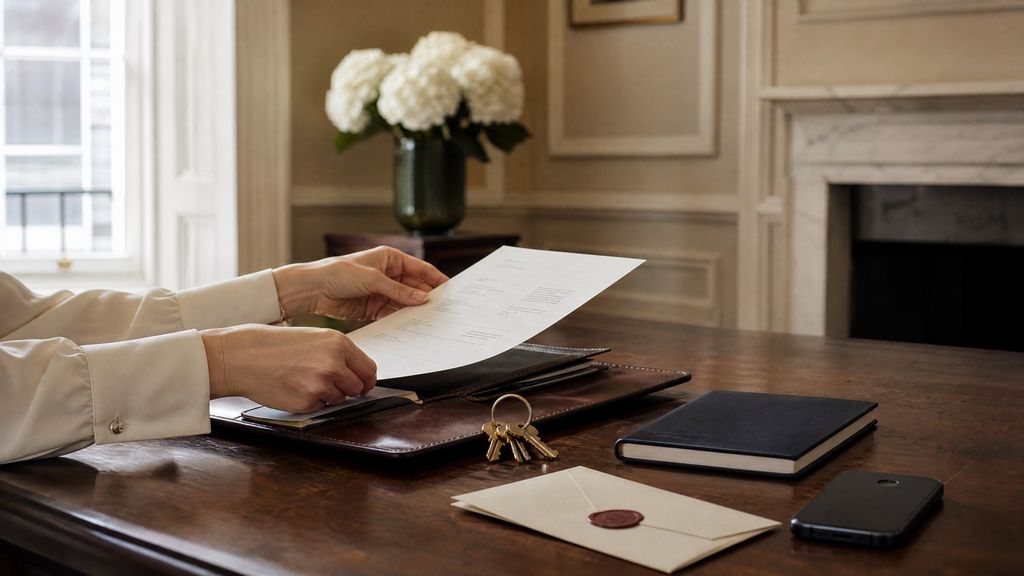
Ask ten executives what their assistant does and you will hear ten different answers. That is the point of the role. A good Executive Assistant shapes their work around one person's time, priorities and pressures, which makes the job hard to describe and easy to underestimate. This guide sets out what the role usually covers, how it changes with the executive it supports, and what to settle before you start a search.
The short answer
An Executive Assistant gives a senior leader back their time. They run the diary, prepare the ground for important meetings, manage the flow of communication, organise travel, and make sure that what was agreed actually happens. The best ones do it with judgement and discretion, so the executive can concentrate on the decisions only they can make.
Area
What it usually involves
Time and priorities
Running a complex diary, resolving clashes and protecting time for the work that matters most
Meetings
Logistics, agendas and briefing papers, then tracking the actions afterwards
Communication
Triaging email and calls, drafting correspondence and looking after key relationships
Travel and events
Itineraries, transport, accommodation, dinners and events, and the changes at short notice
Follow-through
Keeping commitments, decisions and projects moving between meetings
Confidential support
Handling sensitive business information and, where agreed, private matters
What the day actually looks like
The job description rarely captures the rhythm of the work. On a given morning an EA might untangle two clashing meetings, put together a briefing pack for a difficult conversation, line up a call across three time zones and then chase the follow-up from yesterday's decision. None of it is glamorous on its own. Together it is the difference between an executive who is always catching up and one who walks into every room prepared.
Much of the work is quiet rearranging: a call, a note, a diary that still holds together by the afternoon.
Five things to define before you brief a recruiter
Most difficult EA hires go wrong at the brief, not the interview. Before a search begins, decide what your assistant will own, what they will support and what stays with you or someone else.
1. The diary, and how much say they have over it
Running a complex calendar is the core of the job, but authority varies. Can your EA decline a meeting, move it, or only suggest? How should they weigh a client request against an internal one? Say so at the start and you will save weeks of second-guessing.
2. Meetings and board preparation
This can be as light as booking rooms and video calls, or as substantial as preparing agendas, collating papers and making sure everyone has them in good time. In some roles the EA records decisions, monitors actions and reminds owners of their deadlines.
3. Communication and relationships
Many EAs manage an inbox, draft or proofread correspondence and act as the first point of contact for colleagues, clients and investors. Be clear about what they can answer on your behalf and what must come back to you.
4. Travel, events and expenses
For executives who travel often, the EA arranges transport, accommodation and itineraries, and copes calmly when plans change at the last minute. Event planning, expenses and budget administration may sit here too.
5. Projects and follow-through
Some EAs coordinate initiatives across teams, track deadlines and keep records. If the role includes office management, recruitment coordination, project ownership or private support, name it in the brief. Unspoken expectations are the most common reason a good hire becomes a frustrated one.
How the role changes with the executive
A useful job description reflects what the executive actually does, not just their title.
Supporting a CEO
An EA to a Chief Executive deals in high-stakes priorities: leadership meetings, board and investor preparation, sensitive communications and a wide circle of internal and external relationships. Much of the value lies in filtering, so the CEO's time goes on strategy and they arrive at key meetings with what they need. Decide how much board exposure the role carries and whether it includes any personal support.
Supporting a COO
With a Chief Operating Officer the emphasis tends to shift towards operations: cross-functional meetings, tracking project actions, supporting reporting routines and making sure decisions turn into delivery. A COO with several departments needs an EA who is strong on coordination and persistence; another may need diary, travel and communications above all.
Supporting a Managing Partner
In investment and professional services firms, an EA to a Managing Partner coordinates partner meetings, client commitments, business development, recruitment conversations and firm events, often alongside demanding travel. In private equity, venture capital, hedge funds, asset management, investment banking and family offices, discretion and judgement with senior stakeholders matter as much as organisation. Place Recruitment has spent more than 15 years placing senior EAs in exactly these firms.
Supporting a board
Board-level support covers meeting dates, board papers, logistics and the record of decisions and actions. The EA works with directors, committee members, legal advisers and senior leaders, so accuracy and discretion come first.
Good, and indispensable
A good EA is organised, reliable and professional, and handles the agreed responsibilities well. An indispensable one adds judgement and anticipation. They know what matters most to their executive, see problems before they arrive and keep priorities moving without needing to be asked.
An indispensable EA is not a Chief of Staff by stealth. The difference comes from clear boundaries, shared priorities and an understanding of how the executive likes to work.
You can test for this at interview with scenarios drawn from the real role. Ask candidates how they would:
resolve a clash between two important meetings
prepare an executive for a high-stakes conversation
handle a confidential request from a senior stakeholder
respond when travel plans change at short notice
track actions across several teams without creating extra admin
Choose the scenarios that match the role. An EA supporting a CEO and a board needs different experience from one whose work is mostly operational coordination.
Permanent or temporary?
It depends on how long you need the support, how much continuity matters and how quickly you need someone in the seat.
A permanent EA makes sense when the executive needs sustained support, when relationships run long and when knowing the business matters every day. Over time they learn the executive's preferences, earn the trust of stakeholders and build a real understanding of the organisation.
A temporary EA makes sense for leave, a vacancy, a busy project or a period of change. Temporary support keeps things moving while you define the permanent role and find the right long-term person.
What it costs in London
Our 2026 London EA and PA Salary Survey puts Executive Assistant salaries at £42,000 to £110,000 and above, Personal Assistant salaries at £35,000 to £80,000 and above, and temporary EA and PA rates at £22 to £35 an hour. These are market references; the right package depends on the responsibilities, seniority and requirements of each role.
Location shapes the brief too. A role in Mayfair can differ from one in the City, Canary Wharf, the West End, King's Cross, Waterloo or Shoreditch, so include office expectations, hours, travel, any private support, reporting lines and board or project responsibilities.
A brief that works
Before the search starts, agree five things:
Who the EA supports: one executive, several leaders or a wider leadership team.
What they own: diary decisions, communications, travel, board support and follow-up.
Where the boundaries sit: what they handle alone and what needs approval.
What success looks like: what the new hire should have achieved in their first six months.
The working relationship: the pace, the communication style, the discretion and the autonomy you expect.
Common questions
What are the main responsibilities of an Executive Assistant?
Usually the executive's diary, meeting preparation, communications, travel and follow-up on agreed actions. The exact mix depends on the executive and the scope you set for the role.
How is an Executive Assistant different from a Personal Assistant?
An EA usually provides business-focused support to senior leaders, while a PA may also look after personal or private matters. Many roles blend the two, so say in the brief where the balance lies.
Should an EA run board meetings?
They may coordinate board meetings, prepare papers and track actions when that is part of the agreed role. Specify the level of board support you need.
When does a temporary EA make sense?
For leave, a vacancy, a busy period or a transition. Temporary support keeps continuity while you arrange longer-term cover or recruit permanently.
Talk to Place
Place Recruitment is a boutique London recruitment firm specialising in permanent and temporary Executive Assistant and Personal Assistant hires, working with businesses and senior executives across Mayfair, the City, Canary Wharf, the West End, King's Cross, Waterloo and Shoreditch.
I'm often asked this by a founder or managing partner who's stretched thin and isn't sure what kind of help they need. My first question back is simple: is the problem your diary, or the business? If you're losing your week to meetings, email and travel changes, you need an Executive Assistant. If decisions get made and then nothing moves across the firm, you need a Chief of Staff. It comes down to scope and ownership.
When an EA hire goes wrong, it's usually been decided before the first interview. The brief was vague, the salary was off, or nobody asked whether the executive and the candidate would actually get on. This is the five-step process I'd run if I were hiring an EA for a growing London firm. Before anyone writes a job description, decide who the EA will support and what they'll own. Complex diary and travel management? Board support? Project coordination? Usually it's some mix.
Most people who ask me to find them a private PA start by saying they need someone organised. That's the easy part. Every candidate I put forward can run a diary. What I'm really looking for is the person your principal still trusts in five years: someone with judgement, who knows when to act and when to say nothing at all. Every household is different, but the job usually draws on this list:
A great assistant changes everything.
Start a thoughtful conversation with Place Recruitment, whether you’re hiring, exploring senior search or planning your next career move.
Superstar candidates
You’re the nerve and steel behind every great business. We specialise in placing Executive Assistants and Personal Assistants who thrive at the highest level, with opportunities across finance, tech and professional services.
Our team understands how the right assistant and executive partnership works. We take time to understand the brief, share clear advice and focus on the right fit, not just a CV.