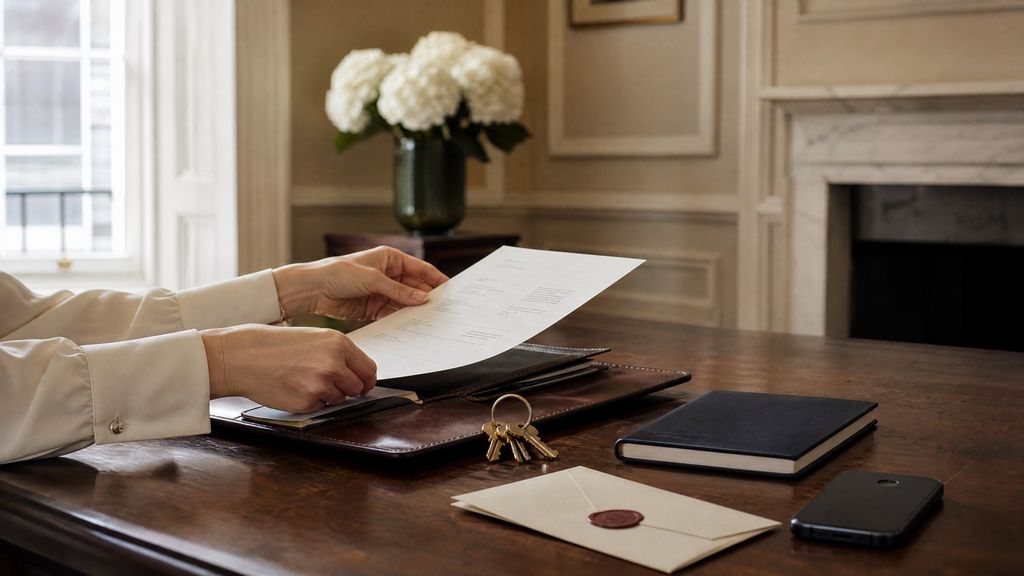
Most people who ask me to find them a private PA start by saying they need someone organised. That's the easy part. Every candidate I put forward can run a diary. What I'm really looking for is the person your principal still trusts in five years: someone with judgement, who knows when to act and when to say nothing at all.
What does a private PA do?
Every household is different, but the job usually draws on this list:
Diaries, correspondence and appointments, personal and professional
Travel, often international and often changing at the last minute
Running the homes: household staff, suppliers, maintenance and security
Household finances: invoices, expenses and records, within agreed controls
Family logistics: events, school commitments and appointments
Working with the family's lawyers, accountants and investment managers
Before we go any further, I'll ask you one question: how much of this is private life, and how much is business? A purely private role runs the principal's life. A family-office role adds executive work on the business side. Get that split wrong and you'll spend weeks interviewing the wrong people.
Much of the work happens on the move, with everything ready before the principal asks.
At a glance
Role
What it covers
London pay (2026)
Hire when
Private PA (permanent)
Personal, household or blended private-office support
£35,000 to £80,000+
You need consistent, long-term support
Family office EA (permanent)
Executive support for a principal or senior family-office leader
Our 2026 salary survey puts London PA salaries at £35,000 to £80,000+. That's a wide range, and it should be, because private roles vary enormously. The title tells you very little. These are the things that move the number:
Hours. Evenings, weekends and on-call cost more. 'Occasional out-of-hours' means something different to every principal, so spell out what you mean.
Travel. Travelling with the principal is a different job from booking their flights.
Business work. If the role carries real executive responsibility, I'll benchmark it against the EA range, not the PA one.
The household. Several homes, staff to manage and family finances to run all add weight.
If the budget is light for the brief, I'll tell you at the start. It saves everyone a month.
How do you vet a private PA for discretion?
References tell you someone turned up. They don't tell you whether they'll keep quiet. Right-to-work checks, employment history and references are the baseline. This is what I actually rely on:
How they talk about past employers. If a PA tells me where their old principal spends August, they'll tell someone about yours. The good ones talk about the work in detail and about the people hardly at all.
References from the person they supported. HR will confirm dates. Only the principal or chief of staff can tell you about judgement. I always ask the same question: would you have them back?
A real scenario. A journalist rings asking about the family. A family member asks them to keep something from the principal. The diary falls apart an hour before a flight. I'm not looking for the right answer. I want to hear how they think.
The principal, early. Nobody else can judge chemistry, and I won't pretend I can do it for you. Twenty minutes with the shortlist saves weeks.
Confidentiality, agreed up front. That means the NDA, how devices, keys and records are handled, and any background or credit checks the role justifies. Everything is agreed with the candidate before anything is run.
What should go in the brief?
Give me a vague brief and I'll find you some good generalists. Give me a specific one and I'll find you the three people who actually fit. Tell me:
The split between personal, household and business work
Who they'll support, who they report to, and who makes which decisions
Location, working pattern and what out-of-hours really involves
How much travel there is, and whether they travel with the principal
The systems, household staff and financial admin they'll be managing
The confidentiality terms and the checks involved
How the principal works, and the kind of person they get on with
The last point matters most. Skills are easy to find. Fit is the hard part.
When is a specialist recruiter worth it?
Not every PA hire needs a recruiter. You need a specialist when the search has to stay confidential, when the role is half private and half business, or when getting on with the principal matters as much as the CV.
I've spent more than 15 years recruiting senior PAs and EAs in finance and investment, including for family offices and private clients. Our Personal Assistant recruitment service covers permanent searches, and temporary recruitment covers short-term needs.
What's the difference between a private PA and a family office PA?
A private PA supports an individual or household with their personal life. A family office PA usually adds business administration and works with the family's professional advisers.
How much does a private PA earn in London?
Most permanent private PA roles pay £35,000 to £80,000+, according to our 2026 salary survey. Roles with substantial executive work are benchmarked against the EA range of £42,000 to £110,000+. Temporary PAs earn £22 to £35 per hour.
How do you check a private PA will be discreet?
Take references from the person they actually supported, test their judgement with realistic scenarios, and listen to how they talk about past employers in interview.
I'm often asked this by a founder or managing partner who's stretched thin and isn't sure what kind of help they need. My first question back is simple: is the problem your diary, or the business? If you're losing your week to meetings, email and travel changes, you need an Executive Assistant. If decisions get made and then nothing moves across the firm, you need a Chief of Staff. It comes down to scope and ownership.
When an EA hire goes wrong, it's usually been decided before the first interview. The brief was vague, the salary was off, or nobody asked whether the executive and the candidate would actually get on. This is the five-step process I'd run if I were hiring an EA for a growing London firm. Before anyone writes a job description, decide who the EA will support and what they'll own. Complex diary and travel management? Board support? Project coordination? Usually it's some mix.
Ask ten executives what their assistant does and you will hear ten different answers. That is the point of the role. A good Executive Assistant shapes their work around one person's time, priorities and pressures, which makes the job hard to describe and easy to underestimate. This guide sets out what the role usually covers, how it changes with the executive it supports, and what to settle before you start a search. An Executive Assistant gives a senior leader back their time. They run the diary, prepare the ground for important meetings, manage the flow of communication, organise travel, and make sure that what was agreed actually happens. The best ones do it with judgement and discretion, so the executive can concentrate on the decisions only they can make.
A great assistant changes everything.
Start a thoughtful conversation with Place Recruitment, whether you’re hiring, exploring senior search or planning your next career move.
Superstar candidates
You’re the nerve and steel behind every great business. We specialise in placing Executive Assistants and Personal Assistants who thrive at the highest level, with opportunities across finance, tech and professional services.
Our team understands how the right assistant and executive partnership works. We take time to understand the brief, share clear advice and focus on the right fit, not just a CV.