I'm often asked this by a founder or managing partner who's stretched thin and isn't sure what kind of help they need. My first question back is simple: is the problem your diary, or the business? If you're losing your week to meetings, email and travel changes, you need an Executive Assistant. If decisions get made and then nothing moves across the firm, you need a Chief of Staff.
What's the difference between a Chief of Staff and an Executive Assistant?
It comes down to scope and ownership.
An Executive Assistant owns the executive's office: diary, inbox, meeting preparation, travel and keeping stakeholders in the loop. They usually support one leader or a small leadership team.
A Chief of Staff owns execution across the firm: coordinating priorities between teams, running strategic projects and making sure leadership decisions actually land.
In smaller firms the lines blur. A senior EA often does strategic work, and plenty of Chiefs of Staff still run part of the executive office. So don't let the title do the thinking. Write down what the person will decide, what they'll own, and where they sit next to your COO.
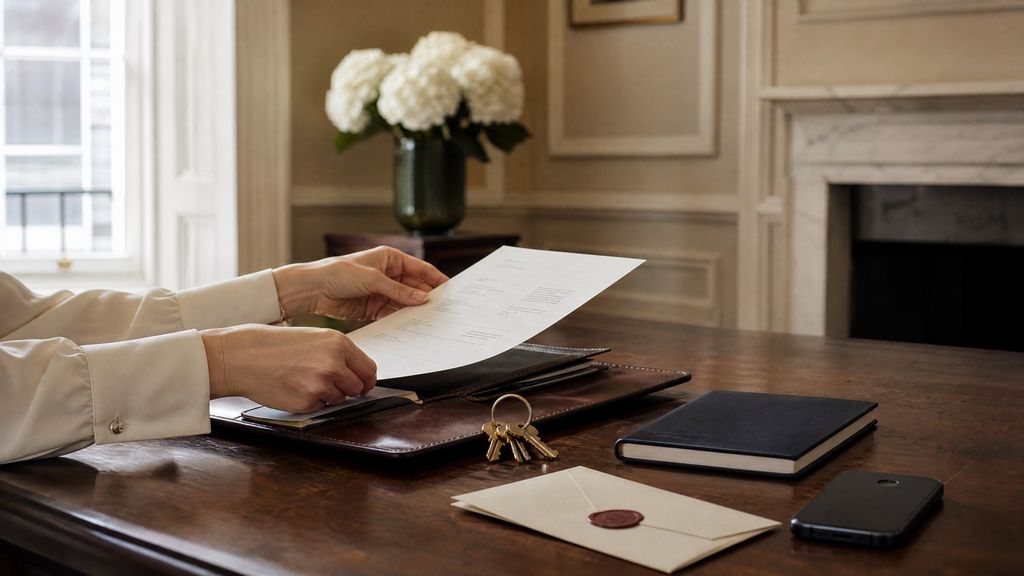
An EA owns the executive's office: diary, inbox, preparation and follow-through.
At a glance
Executive Assistant
Chief of Staff
Scope
One executive or a small leadership group
Priorities and work across the whole firm
Decisions they own
Executive-office processes and agreed admin decisions
Project decisions within delegated authority
Reports to
CEO, founder, partner or another senior executive
CEO or founder, sometimes the COO
London pay (2026)
£42,000 to £110,000+ (permanent)
Senior roles sit above the EA band; scope and authority set the number
Hire when
Diary, communications, travel and follow-through are eating the executive's time
Cross-team execution and strategic projects need a clear owner
More often than not. If you're the founder, partner or COO and you're personally managing every meeting, message and travel change, the work only you can do is waiting. A good EA gives you that time back quickly. Three signs it's time:
Your time is in pieces. Back-to-back meetings, constant diary changes and an inbox you can't get on top of leave no room for decisions or client work. An EA puts structure back into your day.
Things are slipping through. Actions from meetings go nowhere, and people chase you for answers. An EA prepares agendas, captures actions and follows up on commitments so you don't have to.
The work is sensitive. In investment firms and professional services, the EA often handles confidential communications, investor and client logistics, and coordination between offices in Mayfair, the City or Canary Wharf. That needs someone you trust completely.
Agendas, actions and follow-up, so the executive doesn't have to chase.
Recruiting senior EAs into the investment sector is what I've done for more than 15 years. Find out more about our Executive Assistant recruitment.
When is it time for a Chief of Staff?
When the problem is bigger than one person's calendar. The priorities are right, but the teams aren't moving together and decisions stall between meetings. Three signs:
Growth has made things complicated. New teams, offices, clients or investment activity create competing priorities. A Chief of Staff makes clear who owns what and keeps work moving across functions.
Big projects have no owner. An expansion, a restructure or a major internal initiative needs someone to hold the stakeholders, milestones and decisions together, without taking over the functional leaders' jobs.
The CEO needs an execution partner. When the CEO is juggling strategy, the board and operations, a Chief of Staff runs the leadership agenda and raises risks early. Agree their authority before they start, especially if you already have a COO. Blurred lines between the two roles cause friction fast.
A Chief of Staff owns execution across the firm, within agreed authority.
How do you decide which to hire?
Before you open a search, work out what isn't getting done right now. Then answer three questions:
What needs fixing first? If it's your own capacity, that points to an EA. If it's execution across the firm, that points to a Chief of Staff.
What will they own? List real deliverables: diary and communications, or leadership priorities and project delivery.
Where does the role sit? Agree the reporting line, their authority, and where their job ends and your COO's, operations team's and other support staff's begins.
If you still can't tell, talk it through with me before you set the title or budget. Getting the scope right first saves more time than anything else in the search. We also support investment-sector hiring and temporary recruitment across London.
Frequently asked questions
What is a Chief of Staff?
A Chief of Staff is a senior operator who helps a leader set priorities, run strategic projects and keep the whole organisation moving in the same direction.
Is a Chief of Staff more senior than an Executive Assistant?
Usually. A Chief of Staff has a broader remit and often has delegated decision-making authority. But a senior EA to a CEO can carry real seniority too. It depends on the role and the reporting structure.
Should a growing London firm hire an EA or a Chief of Staff first?
Usually an EA, if executive time and admin are what's holding the business back. Hire a Chief of Staff first when cross-team priorities and strategic execution need a dedicated owner.
To talk through an EA or Chief of Staff search, call me on 020 7112 8489 or email [email protected]. We recruit across Mayfair, the City, Canary Wharf, the West End, King's Cross, Waterloo and Shoreditch.
When an EA hire goes wrong, it's usually been decided before the first interview. The brief was vague, the salary was off, or nobody asked whether the executive and the candidate would actually get on. This is the five-step process I'd run if I were hiring an EA for a growing London firm. Before anyone writes a job description, decide who the EA will support and what they'll own. Complex diary and travel management? Board support? Project coordination? Usually it's some mix.
Most people who ask me to find them a private PA start by saying they need someone organised. That's the easy part. Every candidate I put forward can run a diary. What I'm really looking for is the person your principal still trusts in five years: someone with judgement, who knows when to act and when to say nothing at all. Every household is different, but the job usually draws on this list:
Ask ten executives what their assistant does and you will hear ten different answers. That is the point of the role. A good Executive Assistant shapes their work around one person's time, priorities and pressures, which makes the job hard to describe and easy to underestimate. This guide sets out what the role usually covers, how it changes with the executive it supports, and what to settle before you start a search. An Executive Assistant gives a senior leader back their time. They run the diary, prepare the ground for important meetings, manage the flow of communication, organise travel, and make sure that what was agreed actually happens. The best ones do it with judgement and discretion, so the executive can concentrate on the decisions only they can make.
A great assistant changes everything.
Start a thoughtful conversation with Place Recruitment, whether you’re hiring, exploring senior search or planning your next career move.
Superstar candidates
You’re the nerve and steel behind every great business. We specialise in placing Executive Assistants and Personal Assistants who thrive at the highest level, with opportunities across finance, tech and professional services.
Our team understands how the right assistant and executive partnership works. We take time to understand the brief, share clear advice and focus on the right fit, not just a CV.